info:
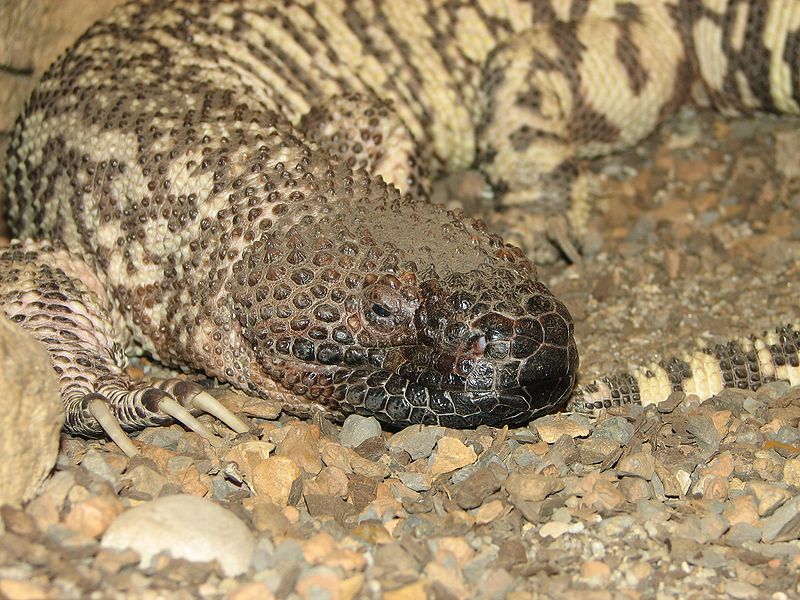
The Beaded lizard (Heloderma horridum) is a species of venomous lizard found principally in Mexico and southern Guatemala. Along with its congener, the Gila monster (Heloderma suspectum), it is the only lizard to have evolved an overt venom delivery system, and has long been considered the only venomous lizard. The beaded lizard is larger than the Gila monster but has duller coloration, black with yellowish bands of differing width depending on the subspecies. A specialized predator that feeds primarily upon eggs, the primary use of its venom is still a source of debate among scientists. However, this venom has been found to contain several enzymes useful for manufacturing drugs in the treatment of diabetes, and research on the pharmacological use of its venom is ongoing.
Threatened throughout its range by overcollection and habitat loss, it is a CITES protected animal. The Motagua Valley subspecies (H. h. charlesborgeti) is one of the rarest lizards in the world, with a wild population of less than 200 animals.
habitat
The beaded lizard is found in the Pacific drainages from Southern Sonora to Southwestern Guatemala and two Atlantic drainages, from Central Chiapas to Southeastern Guatemala. Their habitat is primarily tropical deciduous forest and thorn scrub forest, but are found in pine-oak forest, with elevations from sea level to 1500 meters. In the wild, the animals are only active from April to mid-November, spending about an hour per day above the ground.
The nominate subspecies H. h. horridum is found in Mexico, from Sonora to Oaxaca. The Rio Fuerte beaded lizard (H. h. exasperatum) is found from southern Sonora to northern Sinaloa. The Black beaded lizard ( H. h. alvarezi) is found in the northern Chiapas and the depression of the Río Lagartero in Huehuetenango to northwestern Guatemala. The ranges of these three subspecies overlap, making them sympatric. The Motagua Valley subspecies (H. h. charlesbogerti) is the only allopatric one, separated from the nearest population (H. h. alvarezi) by 250 km of unsuitable habitat.[13] The Motagua Valley beaded lizard is the most endangered of the subspecies if not of all lizards; it is found only in the dry valley of the Río Motagua in the north-east of Guatemala; it is believed less than 200 of these animals exist in the wild.
venom:
The venom glands of the beaded lizard are modified salivary glands located in the animal's lower jaw. Each gland has a separate duct leading to the base of its grooved teeth. When biting, the beaded lizard hangs on its victim and chews in order to get its venomous saliva into the wound. Although its jaw grip is strong its unsocketed teeth are easily broken off at their bases. The beaded lizard's venom is a weak hemotoxin and although human deaths are rare, it can cause respiratory failure. It consists of a number of components, including L-amino acid oxidase, hyaluronidase, phospholipase A, serotonin, and highly active kallikreins that release vasoactive kinins. The venom contains no enzymes that significantly affect coagulation. Almost all documented bites (eight in the past 100 years) have resulted from prodding captive animals with a finger or bare foot.
While invertebrates are essentially immune to the effects of this venom, effects on vertebrates are more severe and varied. In mammals such as rats, major effects include a rapid reduction in carotid blood flow followed by a marked fall in blood pressure, respiratory irregularities, tachycardia and other cardiac anomalies, as well as hypothermia, edema, and internal hemorrhage in the gastrointestinal tract, lungs, eyes, liver, and kidneys. In humans, the effects of bites are associated with excruciating pain that may extend well beyond the area bitten and persist up to 24 hours. Other common effects of bites on humans include local edema (swelling), weakness, sweating, and a rapid fall in blood pressure. Beaded lizards are immune to the effects of their own venom.
The Mexican beaded lizard's base color is black, with yellow bands or patches.
The compounds which have been studied in its saliva have pharmacological properties relating to diabetes, Alzheimer’s disease and even HIV. This hormone was named exendin-3 and is marketed by Amylin Pharmaceuticals as the drug:Exenatide. One study done in 1996 revealed that it binds to cell receptors from breast cancer cells and may stop the growth of lung cancer cells.

The Beaded lizard (Heloderma horridum) is a species of venomous lizard found principally in Mexico and southern Guatemala. Along with its congener, the Gila monster (Heloderma suspectum), it is the only lizard to have evolved an overt venom delivery system, and has long been considered the only venomous lizard. The beaded lizard is larger than the Gila monster but has duller coloration, black with yellowish bands of differing width depending on the subspecies. A specialized predator that feeds primarily upon eggs, the primary use of its venom is still a source of debate among scientists. However, this venom has been found to contain several enzymes useful for manufacturing drugs in the treatment of diabetes, and research on the pharmacological use of its venom is ongoing.
Threatened throughout its range by overcollection and habitat loss, it is a CITES protected animal. The Motagua Valley subspecies (H. h. charlesborgeti) is one of the rarest lizards in the world, with a wild population of less than 200 animals.
habitat
The beaded lizard is found in the Pacific drainages from Southern Sonora to Southwestern Guatemala and two Atlantic drainages, from Central Chiapas to Southeastern Guatemala. Their habitat is primarily tropical deciduous forest and thorn scrub forest, but are found in pine-oak forest, with elevations from sea level to 1500 meters. In the wild, the animals are only active from April to mid-November, spending about an hour per day above the ground.
The nominate subspecies H. h. horridum is found in Mexico, from Sonora to Oaxaca. The Rio Fuerte beaded lizard (H. h. exasperatum) is found from southern Sonora to northern Sinaloa. The Black beaded lizard ( H. h. alvarezi) is found in the northern Chiapas and the depression of the Río Lagartero in Huehuetenango to northwestern Guatemala. The ranges of these three subspecies overlap, making them sympatric. The Motagua Valley subspecies (H. h. charlesbogerti) is the only allopatric one, separated from the nearest population (H. h. alvarezi) by 250 km of unsuitable habitat.[13] The Motagua Valley beaded lizard is the most endangered of the subspecies if not of all lizards; it is found only in the dry valley of the Río Motagua in the north-east of Guatemala; it is believed less than 200 of these animals exist in the wild.
venom:
The venom glands of the beaded lizard are modified salivary glands located in the animal's lower jaw. Each gland has a separate duct leading to the base of its grooved teeth. When biting, the beaded lizard hangs on its victim and chews in order to get its venomous saliva into the wound. Although its jaw grip is strong its unsocketed teeth are easily broken off at their bases. The beaded lizard's venom is a weak hemotoxin and although human deaths are rare, it can cause respiratory failure. It consists of a number of components, including L-amino acid oxidase, hyaluronidase, phospholipase A, serotonin, and highly active kallikreins that release vasoactive kinins. The venom contains no enzymes that significantly affect coagulation. Almost all documented bites (eight in the past 100 years) have resulted from prodding captive animals with a finger or bare foot.
While invertebrates are essentially immune to the effects of this venom, effects on vertebrates are more severe and varied. In mammals such as rats, major effects include a rapid reduction in carotid blood flow followed by a marked fall in blood pressure, respiratory irregularities, tachycardia and other cardiac anomalies, as well as hypothermia, edema, and internal hemorrhage in the gastrointestinal tract, lungs, eyes, liver, and kidneys. In humans, the effects of bites are associated with excruciating pain that may extend well beyond the area bitten and persist up to 24 hours. Other common effects of bites on humans include local edema (swelling), weakness, sweating, and a rapid fall in blood pressure. Beaded lizards are immune to the effects of their own venom.
The Mexican beaded lizard's base color is black, with yellow bands or patches.
The compounds which have been studied in its saliva have pharmacological properties relating to diabetes, Alzheimer’s disease and even HIV. This hormone was named exendin-3 and is marketed by Amylin Pharmaceuticals as the drug:Exenatide. One study done in 1996 revealed that it binds to cell receptors from breast cancer cells and may stop the growth of lung cancer cells.